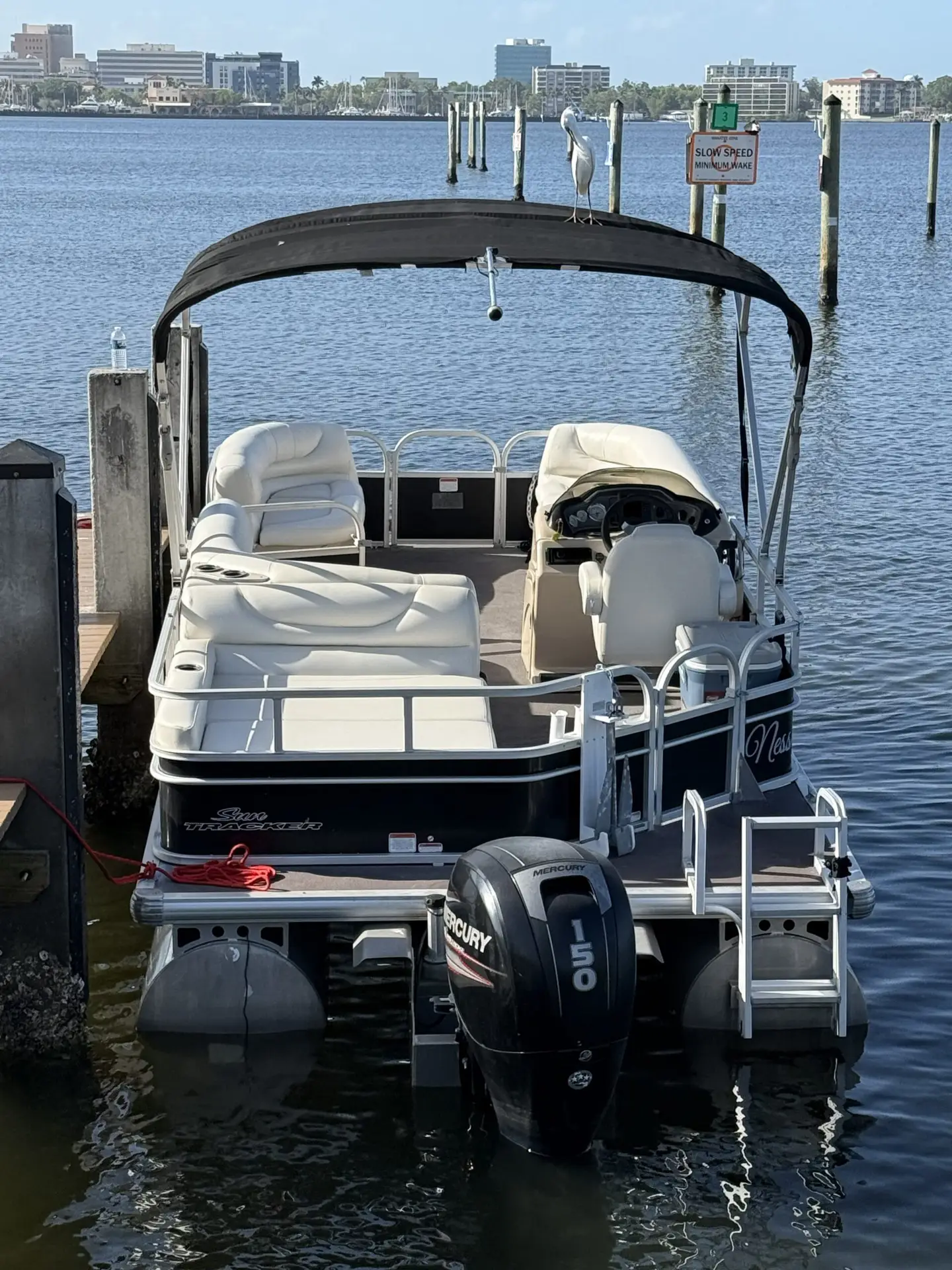
Sun Tracker 22' Tritoon Rental
The Sun Tracker 22 tritoon rides on three pontoons instead of two, so it stays flat and steady when the water gets busy, seats ten, and it is the boat we hand to first time renters on Anna Maria Island.
The Boat
The specs at a glance
| Model | Sun Tracker 22' Tritoon |
|---|---|
| Engine | Mercury 150 horsepower |
| Capacity | Up to 10 passengers |
| Hull | Tritoon, triple pontoon |
| Pets | Dogs welcome |
| Fishing | Allowed |
The rate is per boat, not per person, so a group of ten pays the same as a couple, and every one of those ten has a real seat rather than a spot on the cooler. If your group is closer to twelve, our larger deck boat is the better call, and we would rather move you to it than watch you squeeze.
What comes aboard
Everything you need for the day is loaded before you arrive, included in the rental at no extra charge:
- Cooler
- Floats
- Snorkel gear
- Bluetooth stereo
- GPS and depth finder
- Bimini top
- Two anchors
- Safety equipment
Built to Stay Flat and Steady
The third pontoon is the whole point
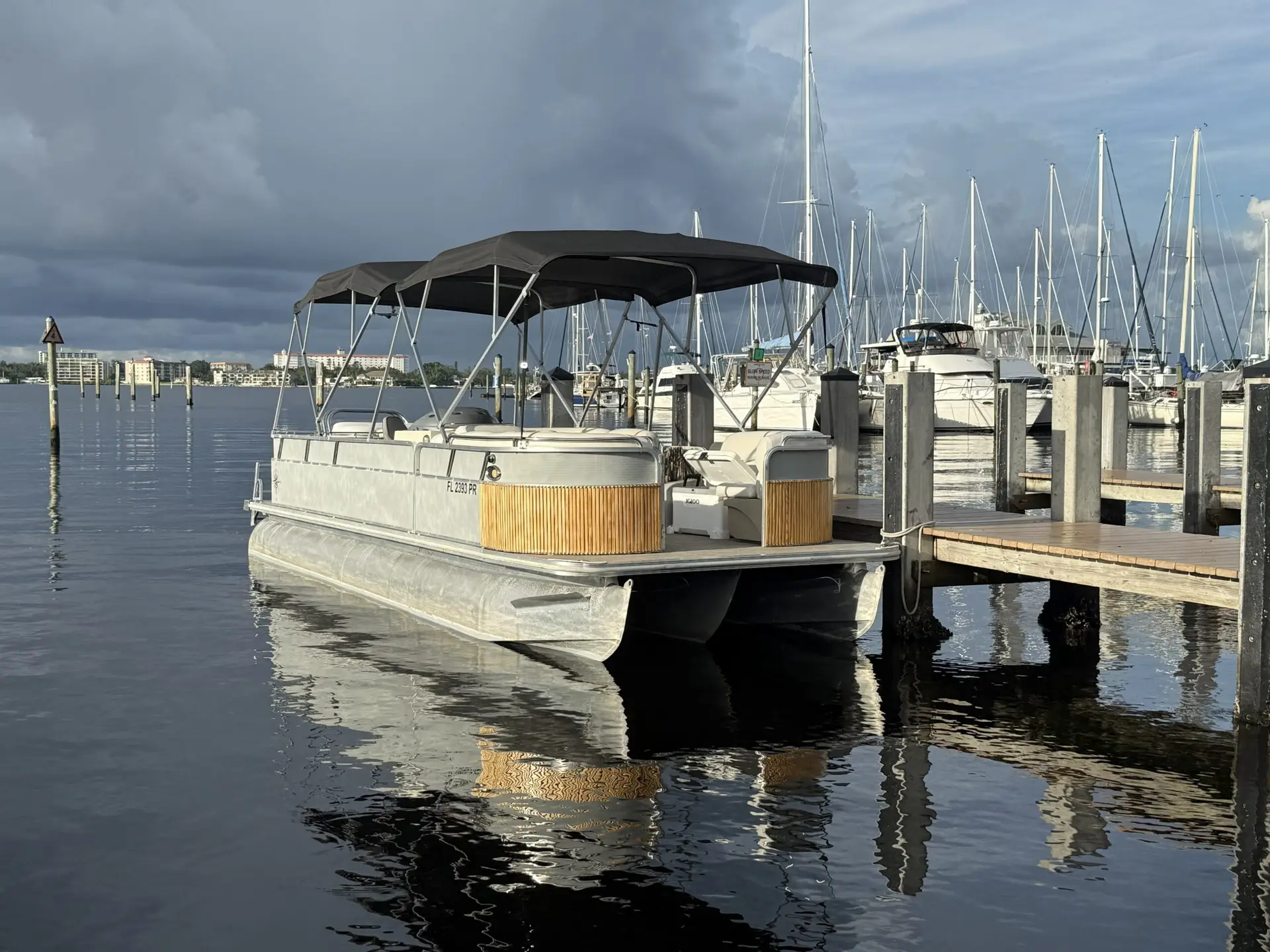
A standard pontoon rides on two tubes and a tritoon rides on three, which sounds like a small detail right up until you are anchored at a sandbar on a busy Saturday with wake rolling in from three directions. That third tube adds stability and lift, so the deck stays flatter, coolers stay put, and people move around without grabbing for something to hold. It is the difference between a boat that reacts to a crowded bay and one that mostly ignores it.
The easiest boat we hand to first timers
A tritoon is forgiving in the ways that matter to someone running a boat here for the first time. It turns predictably, it does not surprise you at low speed, and it sits high enough in the water that the shallows around Anna Maria Island feel far less nerve wracking. When a guest tells us they have not driven a boat on this water before, this is the boat we put them on, every time.
Room for ten, all of them seated
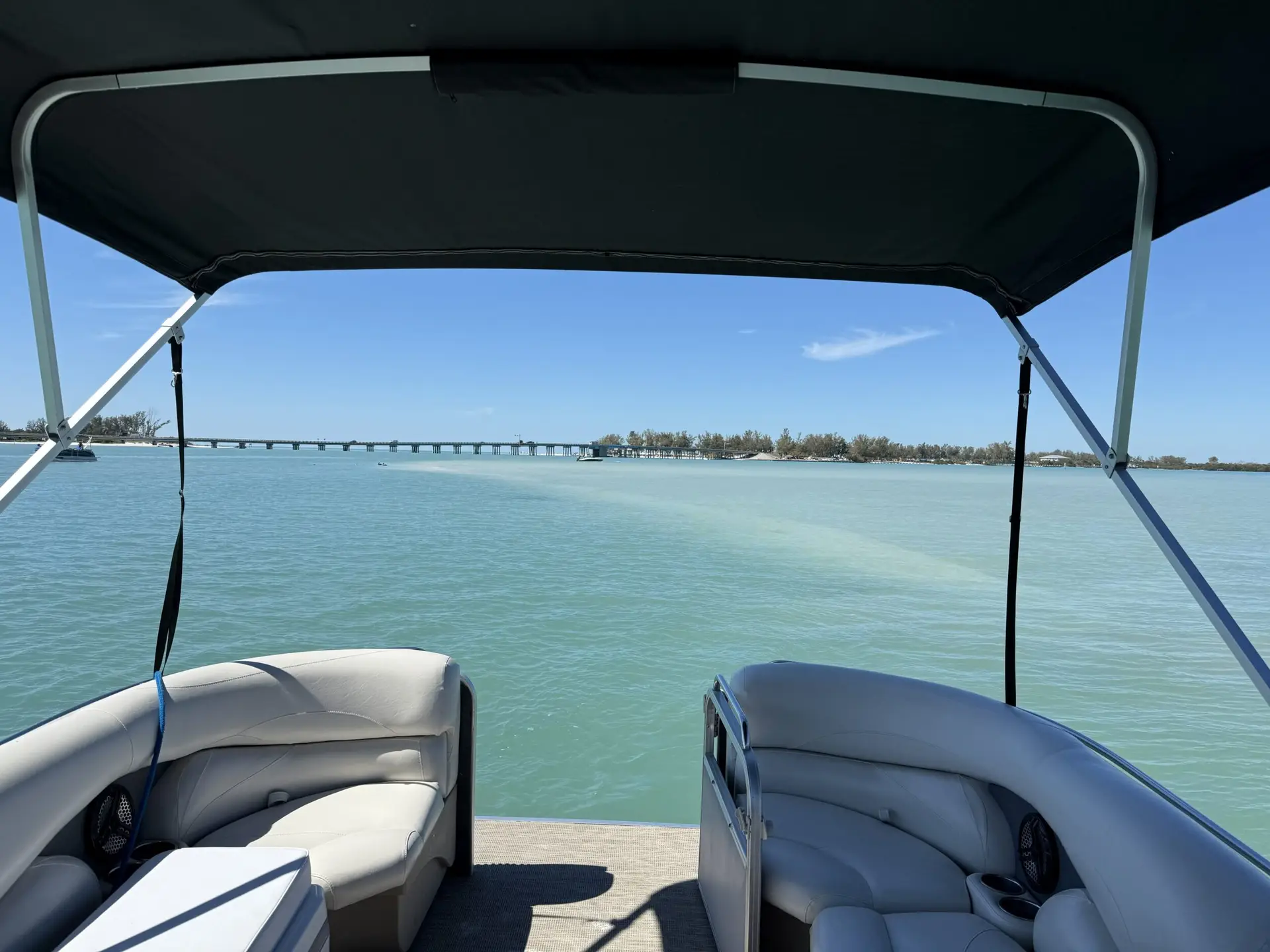
Wrap around seating means ten people have somewhere to sit and face each other, which is the layout that works for a family with kids or a group that wants to talk rather than all stare forward at the console. Nobody is perched on the cooler, and there is still deck space to move when someone wants to swim off the bow.
A Day on the Tritoon
Off the ramp without the stress
The Kingfish ramp gets busy on summer mornings, and a tritoon is the boat you want in that situation, because it turns tightly and moves predictably at low speed. First timers worry most about the ramp, so it helps to know this is the boat that makes the ramp a non event, and we walk you through casting off before you ever touch the throttle.
Anchored at the sandbar
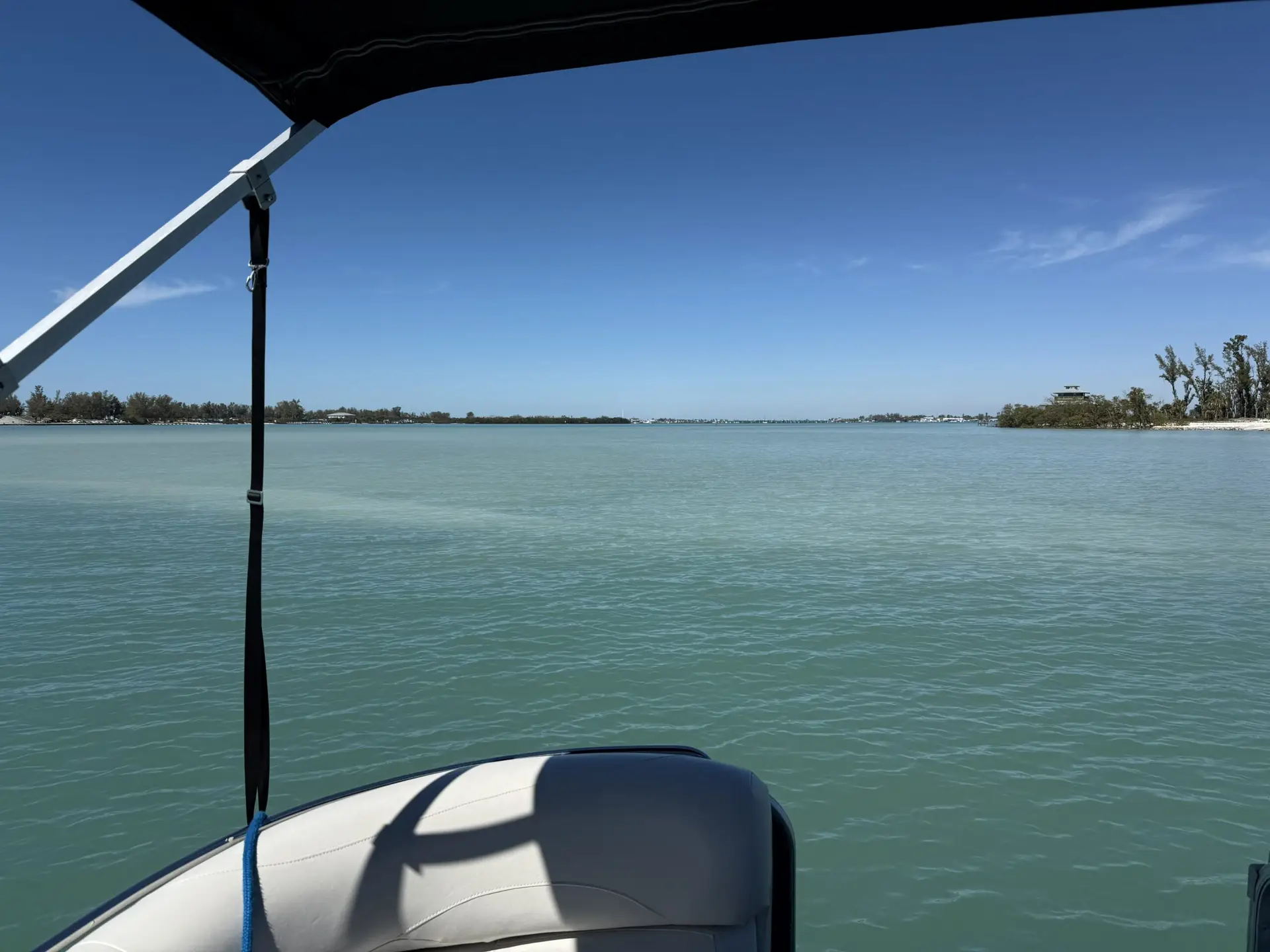
The middle of the day is where the tritoon earns its reputation. It sits high and flat, so you can anchor in shallow water, step off the bow into knee deep sand, and leave the boat sitting level while everyone comes and goes. Four people can move to one side and the deck barely notices, which is the whole reason a family with young kids ends up relaxed instead of bracing.
The ride back in
Afternoon chop on the way home is the part of the day that separates boats, and a tritoon rides over it rather than punching through it, which gives you a slower but noticeably softer trip than a V hull would. For a family with small kids aboard and coolers to keep upright, that trade is almost always the right one.
Is This the Right Boat for Your Group
First time renters
This is the boat we recommend without hesitation to anyone who has not run a boat on this water before, because it is stable, predictable, and forgiving of the small mistakes everyone makes on an unfamiliar boat. John spends a few extra minutes at the dock with first timers, going over the controls and the local water, so you leave the ramp knowing what you are doing.
Families with young kids
A flat, stable deck with wrap around seating and a bimini for shade is the setup that works with children aboard. Everyone sits facing in, the deck runs flat from bow to stern, and the shade holds through the hottest part of the afternoon.
Groups of eight to ten
Ten seats means a group of eight or nine is comfortable rather than packed, with room for bags, a second cooler, and everyone's towels. If your group runs closer to twelve, take a look at all of our boats first, because a larger hull will serve a bigger crowd better than a packed tritoon will.
Where the Tritoon Goes Best
The shallow sandbars
A tritoon draws so little water that the shallowest bars around Jewfish Key and Passage Key open up to you in a way they do not on a deeper hull. You can nose in close, drop anchor, and step off into water that barely covers your knees, which is the picture most families have in their heads when they book a boat on Anna Maria Island.
The Intracoastal run
The protected water inside the island is where a tritoon is happiest, calm most mornings, scenery the whole way, and dolphins working that stretch on a regular basis. For a half day trip this is often the entire itinerary, and it is plenty.
Dock and dine
Several waterfront restaurants around Anna Maria Island and Cortez take boats at their docks, and a twenty two foot tritoon slides into spaces a larger boat cannot. Ask John which ones are easy to tie up at, because a tight dock at lunchtime with ten people aboard makes for a long twenty minutes.
Two Add-Ons Worth Taking
Fuel fill service ($25)
The fuel fill service is $25 plus the cost of the fuel itself, and most guests take it so they can hand the boat back when the day is done without hunting for a fuel dock first. It is the small convenience that keeps the last hour of the trip relaxed.
Prop and skeg protection ($75)
Prop and skeg protection is $75 and covers the propeller and the skeg, the fin under the engine, if either gets damaged on a shallow bar or a hidden oyster bed. It is the add on worth taking if the water around here is new to you, especially since anchoring on a falling tide is the one thing that catches first timers out. You can check the day's tide for the Anna Maria area on the NOAA Tides and Currents station before you head out, and we go over reading it at the dock.
What You Need to Rent
Florida boating requirements
Two quick requirements before your trip:
- The renter is 18 or older, and whoever drives is 21 or older
- Anyone born on or after January 1, 1988 needs a Florida Boating Safety Education Card, earned through a short online course
Want a refresher first? The U.S. Coast Guard safety courses are a good, free place to start.
Experience still counts
This is a bareboat rental, so you drive. The tritoon is the most forgiving boat we have, and you still need to have handled a boat before. We go over the boat and the local water with you before you leave, and John stays on his phone the whole time you are out.
Booking, deposit, and cancellation
Lock in your date with a 50% deposit, or pay in full. Cancel more than 48 hours ahead and it costs you nothing. Inside 48 hours a $200 fee applies. If the weather turns unsafe, that is on us, and we move your trip rather than send you out in it.
What we do not allow
No tubing, wakeboarding, or towing anything behind the boat, for safety reasons, and no trips in unsafe conditions. If a storm rolls in or the wind picks up past what is safe with a family aboard, we move your trip rather than risk it.
First Time on a Boat Here
What the dock walkthrough covers
Before you leave we go through the controls, the throttle, the anchor, the safety equipment, and the radio, then look at the chart together and pick a realistic plan for the hours you have. First timers get a few extra minutes, and nobody has ever been made to feel rushed through it.
What first timers worry about
The two things new renters name most are docking and running aground, and both have straightforward answers. Docking is one of the reasons we recommend this boat, since it moves slowly and predictably at low speed, and running aground comes down to watching the depth finder and staying in marked water, which is what we walk through before you go.
You are reachable out there
John stays reachable by phone the entire time you have the boat, and most first timers call once, usually to ask where to head next rather than because anything is wrong. That is a perfectly good reason to call, and it is part of why guests who have never rented before leave a review saying how easy the whole day felt.
Questions About the Tritoon
What is the difference between a pontoon and a tritoon?
A pontoon rides on two tubes and a tritoon rides on three. That third tube adds stability, lift, and a smoother ride in chop, which you notice most when the water gets busy or when you are anchored somewhere with wake rolling through.
How many people fit on the Sun Tracker 22 tritoon?
Up to 10, and the rate is per boat rather than per person.
Is the Sun Tracker 22 tritoon rental right for a first timer?
Yes, and it is the boat we actively recommend for a first rental. It is the most forgiving boat in our fleet, it handles predictably at low speed, and we spend extra time at the dock with anyone who has not run a boat on this water before, so you leave confident rather than guessing.
Are dogs allowed on the tritoon?
Yes, dogs are welcome on every boat we rent, at no extra charge.
Can we fish and swim from the boat?
Fishing is allowed and swimming off the boat is part of the day for most groups. There is a ladder aboard for getting back on, and the shallow draft means you can anchor somewhere you can stand up.
Take the Tritoon Out
Check what is open for your dates below, or call John at (941) 877-0825 and he will tell you honestly whether the tritoon is the right boat for your group before you book anything.